
Roofing · Derby, Derbyshire
Roofer in Littleover, Derby: Interwar & Postwar Tiled Semis, Leafy Slopes & the St Peter's Village Core (DE23)
Littleover is a tile suburb before it is anything else, and that single fact shapes almost every roof we look at here. Where the inner terraces off Normanton Road are a world of natural slate and party-wall chimney stacks, Littleover — about three miles south-west of the city centre along the Burton Road axis, in the DE23 postcode — is street after street of pitched, tiled semis: interwar clay plain tiles on the 1930s bay-fronted houses and concrete interlocking tiles on the postwar and later estates. This leafy south-western suburb is core coverage for Derby Roofer Quality Repair & Replace, an easy run from our base at 318c Normanton Road.
The ward has grown into that role. Littleover was a separate village of 11,867 as recently as 1961, clustered around St Peter's Church and The Hollow, before interwar and postwar house-building swelled it and it merged with Derby in 1968; today the ward population stands at 23,958, with later estates such as Heatherton Village extending it southward from 1999. Layer upon layer of tiled housing, and most of it now old enough that the coverings are working — slipped and cracked tiles, corroded fixings, perished felt underlay and ridge lines lifting off their bedding. It is honest, repeatable pitched-roof work, week in and week out.
The other thing about Littleover is the trees. It is a genuinely green suburb, and shaded north-facing tile slopes here carry moss that holds moisture against the tiles, while leaf litter blocks valleys and gutters and backs water up under the coverings. Away from the small medieval core there is no watercourse or flood corridor through the main streets, so the roof story here is tile age and exposure rather than heritage constraint or the Derwent flood plain. Littleover sits wholly inside the City of Derby unitary authority, so building control and any re-roofing notification run through Derby City Council, and every survey we do is free with a fixed written quote to follow.
Local Service
The Tiled Semis: Interwar Clay & Postwar Concrete
Littleover's volume of work is the tiled semi in its many vintages — and each vintage fails in its own way, which is why we survey the covering before quoting rather than assuming a standard job.
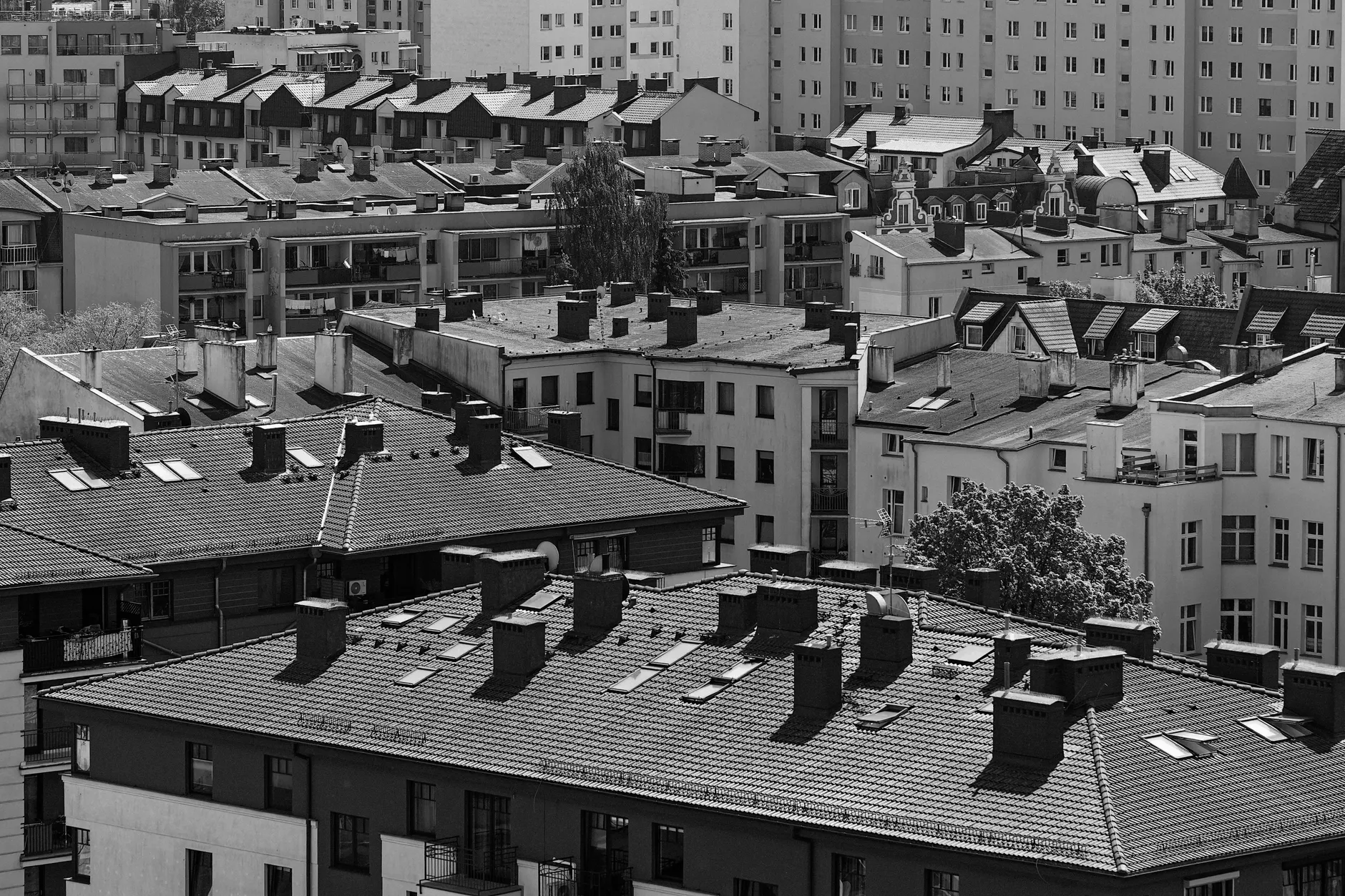
1930s Bay-Fronted Semis on Clay Plain Tiles
The long runs of 1930s bay-fronted semis that fill the DE23 streets between Burton Road and Blagreaves Lane were laid in clay plain tiles, and after ninety-odd Derby winters those coverings are at the age where the small stuff turns into leaks. Individual tiles slip as their nibs weaken or their nails corrode, the sand-and-cement bedding under the ridge and hip tiles cracks and lets tiles rock loose, and the original underlay has gone brittle enough to tear. The recurring inland-Midlands driver is freeze-thaw: water soaks into a hairline-cracked tile through Derby's wet winters and splits it apart when it freezes.
Surveying the Whole Slope, Not Just the Slipped Tile
We survey the whole slope, not just the visible slipped tile, because one dropped tile usually means a run of tired fixings around it. Where the covering has life left we re-fix and repair to BS 5534, matching replacements to the original clay — Staffordshire blue or Rosemary-type red tiles, made regionally, are the like-for-like coverings a Derby repair is matched to. The survey is free and the written quote fixed before any work starts.

Postwar & Estate Concrete Interlocking Tiles
Overlaid on the interwar stock, Littleover carries a large body of postwar semi-detached and detached housing on concrete interlocking tiles — the larger, single-lap tiles that covered estates from the 1950s through the 1970s. Concrete tiles do not fail like clay: rather than slipping one at a time they lose their surface over decades, going porous, gaining weight as they soak up water, and shedding the coloured coating that once shed it. The fixings and the ridge are usually what let go first, so a whole slope can be sound in body but leaking at the ridge, verge and abutments.
Repair or Replacement: Assessed at the Survey
On these roofs we assess whether a covering is best repaired and re-fixed or has reached the point of a roof replacement. Where it is repair, ridges are re-bedded to BS 5534 with mechanical fixing against wind uplift as the 2014 revision requires; where it is replacement, we set out both routes in writing so the choice is yours.
Heatherton & the Newer Estates from 1999
The southward growth of Littleover — Heatherton Village and the estates that came with it from 1999 onward — brought a newer layer of tiled roofs only now reaching their first round of real attention. On stock of this age the coverings are generally sound, and the recurring calls are about details rather than the field of the roof: a cracked dry-verge unit, a lifted ridge along an exposed run, a slipped tile after a gale, or flashing where an extension or bay meets the main roof.
Treating Modern Estates on Their Own Terms
We treat the modern estates on their own terms rather than assuming an old-roof job, and price a targeted roof repair in writing after the free survey. Where a roof is genuinely still within a builder's warranty period we will say so, so you are not paying for something the developer should put right.
Local Service
Leafy Slopes: Moss, Valleys & Blocked Gutters
Littleover's tree cover is part of its appeal and part of its roofing workload — the shaded, wooded setting is a standing driver of moss, blocked valleys and overflowing gutters that no amount of tile quality prevents.
Moss & Organic Growth on North-Facing Tile Slopes
In a leafy suburb like Littleover the north-facing and tree-shaded tile slopes never fully dry out, and that is exactly the condition moss and algae want. A thick moss mat holds moisture against the tiles and in the laps, accelerates freeze-thaw damage on clay and speeds the surface breakdown of concrete tiles, and sheds into the gutters and valleys below where it forms a dam. It is a slow, cosmetic-looking problem that quietly shortens the life of a covering with years left in it.
Clearing Growth Without High-Pressure Damage
We clear growth carefully rather than with high pressure, which does more harm to an ageing tile than the moss did. The survey checks whether the growth is merely surface or has opened up laps and fixings underneath, and the written quote covers clearance plus any repair the moss has been hiding.
Valleys, Guttering, Fascias & Soffits Under the Canopy
Leaf litter is the other tax of a green suburb. It settles into open and lead-lined valleys, packs gutters and hoppers, and backs rainwater up under the tile edge and behind the fascia, where over time it rots timber fascias and soffits and lets water track into the roof void. On Littleover's larger pitched semis, with more slope feeding each gutter run, a blocked valley in a downpour puts a surprising volume of water where it should not be.
Re-Falling Gutters & Renewing Valley Lead
Our guttering, fascias and soffits work clears and re-falls gutter runs, renews split or sagging sections, and replaces rotten timber — commonly with low-maintenance uPVC where the look allows. Where a valley has failed we re-form it to shed cleanly, and any leadwork is renewed to BS EN 12588 in the correct code and length.
Local Service
The Old Village Core & Littleover Coverage
St Peter's & The Hollow: The Older Core
For all its tiled-semi character, Littleover keeps a small medieval village core around St Peter's Church and The Hollow, where some older listed and slate-roofed buildings sit among the interwar streets. Roofs of that kind are a different job from an estate semi — natural slate or older clay tile, hand-cut detailing, and a duty to repair like-for-like — and where the building carries any protection, materials matter as much as method.
Matching Materials to the Older Core
Toward the Peak District the regional vernacular shades into natural stone slate, and on the older Derbyshire stock the reference coverings are Staffordshire blue and Rosemary-type clay tiles. We advise on the right like-for-like material, confirm whether Derby City Council's conservation or listing constraints apply, and set the approach out in a free survey.
Covering Littleover from Normanton Road
Our coverage runs the length of Littleover — the village centre around St Peter's, Blagreaves, the Rykneld Road edge, the Heatherton estates and out toward Sunny Hill — across the DE23 postcode. Because we work the suburb regularly we know its housing eras on sight, which shortens the survey and sharpens the quote: we can usually tell a re-fixable slope from a re-roof candidate before the ladder is up.
Any notifiable or structural roof work runs through Derby City Council, the same unitary authority as our Mickleover and Allestree coverage. For a genuine emergency — a slipped-tile leak, a gale-lifted ridge, water coming through a ceiling — the line is answered 24/7 on 07700 149979, and our full list of services sets out everything we cover here.
Littleover is a suburb of tiled semis — interwar clay plain tiles on the 1930s bays and concrete interlocking tiles on the postwar and Heatherton estates — so most of our roof repairs and re-roofing work here turns on tired fixings, cracked bedding and perished underlay rather than the slate and chimney stacks of the inner city. The leafy setting adds its own workload: see our guttering, fascias and soffits page for the blocked valleys and rotten timber, and our chimney and leadwork page for abutment and flashing renewal. Our neighbouring Mickleover and Allestree pages show how the western village core and the affluent northern estates differ from Littleover's tiled-semi grid — or see all our services. To see how the 24-hour line and a fixed written quote fit together, visit home.
Service Area
Serving Littleover & the DE23 semis
Frequently Asked Questions
What parts of Littleover do you cover?
We cover the whole of Littleover across the DE23 postcode — the old village centre around St Peter's Church and The Hollow, Blagreaves, the Rykneld Road edge, the Heatherton Village estates and out toward Sunny Hill. Our base is at 318c Normanton Road, about three miles north-east along the Burton Road axis, so Littleover is part of our everyday round rather than a special trip. Because we work the suburb every week we can usually judge access and the likely job from the address before a van sets off.
Why does Littleover's housing make it a tile job rather than slate?
Littleover grew from a village of 11,867 in 1961 into a suburb of 23,958 chiefly through interwar and postwar house-building, so away from the small medieval core it is overwhelmingly pitched, tiled semis rather than the inner city's slate terraces. The 1930s bay-fronted houses carry clay plain tiles and the postwar and estate stock concrete interlocking tiles, and both are now old enough that fixings, bedding and underlay are failing. That is why nearly every routine Littleover roof we survey is a tiled slope, and why we match clay repairs to regional Staffordshire blue or Rosemary-type tiles rather than slate.
My 1930s semi has a slipped tile — is it a quick fix or a bigger problem?
A single slipped tile on a 1930s clay roof is often the visible sign of a run of tired fixings around it, because tiles of that age tend to lose their nibs or corrode their nails at a similar rate across a slope. We survey the whole slope rather than just re-hanging the one tile, so we can tell you honestly whether it is a genuine one-tile repair or the start of a wider re-fix. Whatever the answer, the written quote is fixed before we start.
Do concrete tile roofs fail differently from clay ones?
Yes. Concrete interlocking tiles do not usually slip one at a time like clay plain tiles; instead they lose their surface coating over decades, go porous, and often start leaking at the ridge, verge and abutments while the field of the roof still looks sound. That means a concrete roof can need re-bedding and re-fixing at the ridges long before the tiles themselves are finished. We assess which situation you have during the survey and set out repair and replacement routes in writing so the choice is yours.
Why is moss such a problem on Littleover roofs?
Littleover is a leafy, tree-lined suburb, so its north-facing and shaded tile slopes never fully dry out, and that damp shade is exactly what moss and algae need. A thick moss mat holds moisture against the tiles, accelerates freeze-thaw damage through Derby's wet winters, and sheds into valleys and gutters where it forms a dam. We clear it carefully rather than with high pressure, which would damage an ageing tile, and check whether the growth has been hiding open laps or failed fixings underneath.
Can leaf litter really damage my roof and gutters?
It can, and in a suburb as wooded as Littleover it is one of the commonest underlying causes of a leak. Leaf litter settles in valleys and packs gutters and hoppers, backing rainwater up under the tile edge and behind the fascia, where over time it rots timber fascias and soffits and lets water track into the roof void. On larger pitched semis with more slope feeding each gutter, keeping runs clear is genuinely preventative rather than cosmetic.
Do I need permission for roof work in Littleover?
For most tiled-semi repairs and like-for-like re-roofs on the ordinary estate stock, no separate permission is needed, though any notifiable or structural work runs through Derby City Council as the unitary building-control authority. The exception is the old village core around St Peter's, where some older listed and slate-roofed buildings sit and conservation or listing constraints can govern materials on street-facing elevations. We confirm whether any such constraint applies to your address before recommending materials.
What roofing standards do you work to?
Our re-slating and re-tiling work holds to BS 5534, the British Standard for slating and tiling, which since its 2014 revision requires mechanical fixing of coverings against wind uplift. Flat-roof work is carried out to BS 6229, reinforced bitumen membrane work to BS 8217 and BS 8747, and any leadwork to BS EN 12588 in the correct code and length. We sell that standard of work and a fixed written quote rather than any credential claim.
Do you cover the newer Heatherton estates?
Yes — the estates that extended Littleover southward from 1999, including Heatherton Village, are part of our regular coverage. On stock of that age the coverings are generally still sound, so the calls tend to be about details — a cracked dry-verge, a displaced ridge, a slipped tile after a gale, or flashing where an extension meets the main roof — rather than the whole slope. Where a roof is genuinely still within a builder's warranty period we will tell you, so you are not paying for something the developer should put right.
How quickly can you get to an emergency in Littleover, and how do quotes work?
Our base at 318c Normanton Road is an easy run into Littleover along the Burton Road axis, and we run the suburb as regular coverage rather than dispatching cold, so for a genuine emergency — a slipped-tile leak, a gale-lifted ridge, or water coming through a ceiling — the line is answered 24 hours a day on 07700 149979 and we give a realistic arrival window. Where a full repair cannot happen immediately we make the roof safe and watertight first, then quote the permanent fix. Every survey is free and carries no obligation, and the quote you get back is fixed and in writing, so the figure we give is the figure you pay once work starts.

Get a Free Roof Survey for Littleover
Interwar semi off Blagreaves Lane or a Heatherton estate roof — call 07700 149979 any hour for a fixed written quote.
07700 149979