
Roofing · Derby, Derbyshire
Roofer in Mickleover, Derby: Three Roofing Eras from the Uttoxeter Road Core to the New-Build Fringe (DE3)
Mickleover is unusual on our patch because it holds three distinct roofing eras side by side, and knowing which one you are standing under is half the job. The only Derby suburb in the DE3 postcode, about two miles west of the city centre along Uttoxeter Road, it runs from a small old village core strung along that road, through a large body of postwar semi-detached and detached estate housing, out to an expanding fringe of modern new-build on its western edge. Derby Roofer Quality Repair & Replace covers every one of those layers — the conservation-sensitive core, the volume estate stock, and the newest developments.
The scale of the change is the story. Mickleover was a civil parish of 9,709 as recently as 1961, and decades of estate-building have pushed its population past 18,000; the former University of Derby Mickleover campus alone, in use from 1964 to 2007, was redeveloped as around 700 new homes, and housebuilders continue to release large new-build phases toward Radbourne Lane. Each wave brought its own covering: period clay tile and slate in the old core, concrete interlocking tiles across the postwar estates, and current tiled systems on the newest streets. The volume of our work is that middle band — the postwar and estate concrete tiles now reaching the age of slipped tiles, perished felt, dry-verge failure and lifting ridge lines.
The old core changes how we advise on the older buildings. Mickleover's historic centre around Uttoxeter Road is one of Derby City Council's designated conservation areas — a former village centre — so roof coverings and detailing on the older buildings there are consent-sensitive and expected to be repaired in matching clay tile or slate, while the surrounding estates are unconstrained tiled stock defined by age and build quality. All of it sits inside the City of Derby unitary authority, so building control runs through Derby City Council. Whichever of the three eras your roof belongs to, the survey is free and the written quote is fixed.
Local Service
The Estate Stock: Postwar & Modern Concrete Tiles
The body of Mickleover's housing — and the volume of our work — is the postwar and modern estate semi and detached home on concrete interlocking tiles, and that stock is now firmly at the age where roofs need attention.

Slipped & Cracked Concrete Tiles on the Postwar Estates
The large sweep of postwar semi-detached and detached housing that filled Mickleover from the 1950s onward was laid in concrete interlocking tiles, and after decades of Derby's wet, freeze-thaw winters those coverings are working. Concrete tiles go porous and lose their surface coating as they age, gaining weight and shedding grit, and the fixings weaken until a gale drops a run of them. Cracked tiles wick water in, and the standing inland-Midlands driver — repeated saturation and winter freeze — splits a hairline crack open.
Surveying the Whole Estate Slope
We survey the whole slope, because a single slipped tile on an estate roof usually points to a run of tired fixings rather than a one-off. Where the covering has service left we re-fix and repair to BS 5534, which since its 2014 revision requires mechanical fixing against wind uplift; where it has reached the end, we set out a re-roofing route alongside the repair so the decision is yours.
Dry-Verge, Ridge & Felt Failures on Ageing Estate Roofs
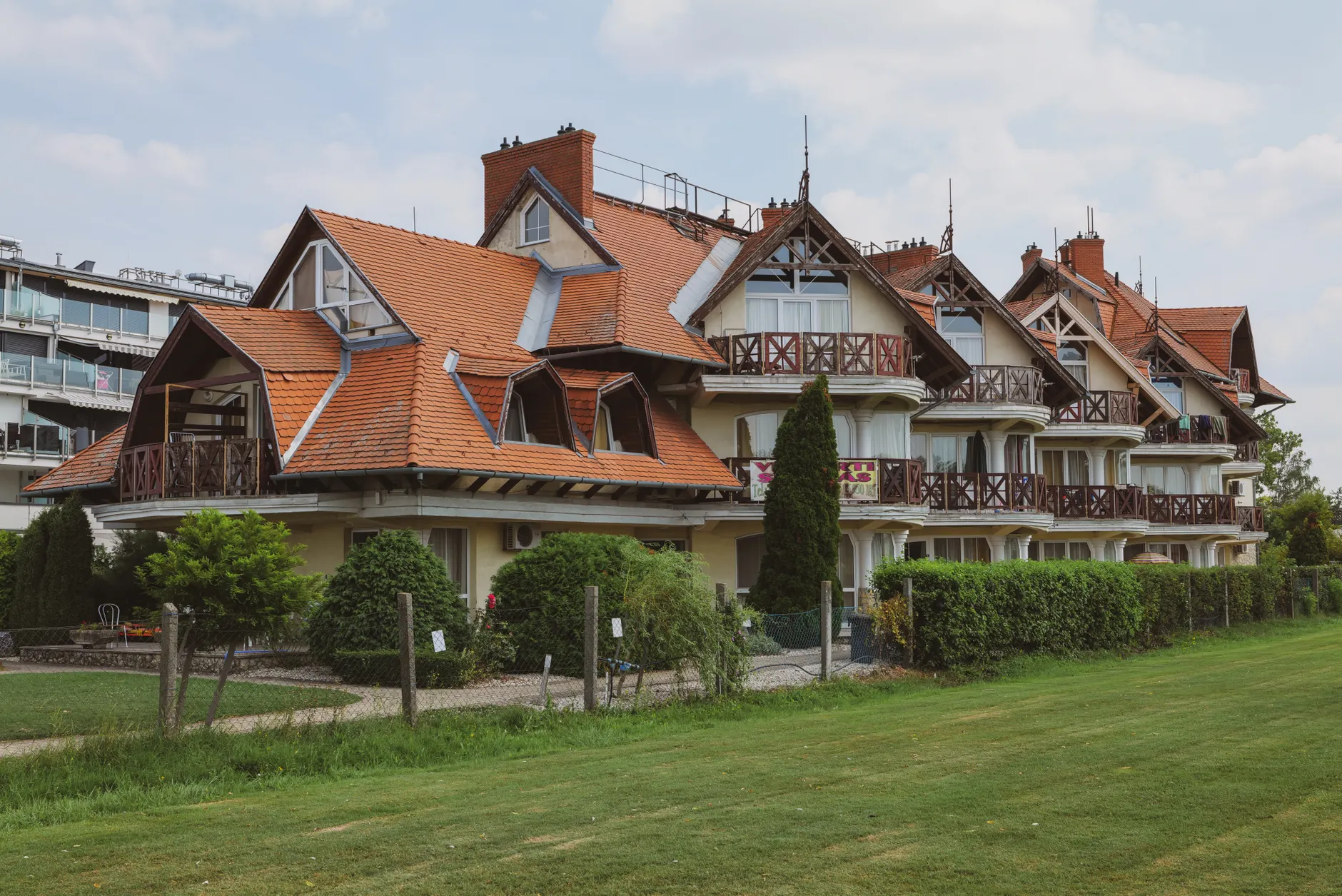
On Mickleover's estate roofs the covering is often sound in the field while the details have let go — and details are where the leaks are. Mortar-bedded ridges and verges crack and drop their pointing, older dry-verge and dry-ridge systems become brittle and lift, and the original bitumen felt underlay perishes until it no longer provides the second line of defence beneath the tiles. A roof can look perfectly respectable from the street and still be quietly taking water in at the ridge, verge and abutments.
Weighing Repair Against a Full Re-Cover
We re-bed and re-fix ridges and verges to BS 5534 with mechanical fixing, renew failed dry systems, and where the underlay has gone we explain honestly what that means — because you cannot renew felt without lifting the tiles, the point at which a targeted roof repair and a full re-cover converge in cost. We set out both so you can weigh them, and price whichever you choose in writing after the free survey.

The New-Build Fringe Toward Radbourne Lane
Mickleover's western edge is still growing — the former University of Derby campus became around 700 new homes, and phases continue toward Radbourne Lane — so a real slice of the suburb carries current tiled roofs only just out of, or still within, a builder's warranty. On roofs this young the coverings are sound, and the calls are about details a developer's finish sometimes leaves short: a cracked dry-verge unit, a displaced ridge on an exposed run, a slipped tile after a gale, or flashing where a bay or extension meets the main roof.
Treating the New-Build Fringe on Its Own Terms
We treat the new-build fringe on its own terms rather than assuming an old-roof job, and where a roof is genuinely still within warranty we will tell you so, so you are not paying for something the developer should put right. A targeted repair on modern stock is priced in writing after the free survey.
Local Service
The Uttoxeter Road Core: Conservation-Sensitive Roofs
Mickleover's old heart is a designated conservation area, and that changes how we approach the older buildings there — materials and detailing matter as much as method.
Period Clay Tile & Slate in the Conservation Core
The older buildings along Uttoxeter Road and around the village centre carry the plain clay tile and natural slate coverings typical of a Derbyshire former-village core, and because that centre is one of Derby City Council's designated conservation areas, roof detailing on the street-facing elevations is protected and expected to be repaired like-for-like. A period roof here is a different job from an estate semi — hand-sorted tiles or slates, traditional bedding and detailing, and a duty to match rather than substitute.
Matching to the Regional Reference Coverings
The regional reference coverings we match to are Staffordshire blue and Rosemary-type red clay tiles, still made in Staffordshire and Derbyshire, with natural stone slate the vernacular toward the Peak District. We confirm whether conservation or listing constraints apply to your building before recommending anything, advise on the correct like-for-like covering, and set the whole approach out in a free survey.
Chimney Stacks & Leadwork on the Older Buildings
The older core stock comes with the features the estates largely lack: chimney stacks, lead-lined valleys, and the flashings and soakers where a roof meets a stack, a parapet or an abutment. On buildings of this age the lead is often the original, work-hardened and split along its folds, the stack's flaunching and pointing cracked, and the back-gutter behind the stack the first place a leak appears. It is skilled, traditional work, and doing it right keeps a period roof watertight without spoiling its appearance.
Renewing Flashings & Sympathetic Detailing
Our chimney and leadwork renews flashings, soakers and valley linings to BS EN 12588 in the correct code and length, re-points and re-flaunches stacks, and forms back-gutters that actually shed. Where the building sits in the conservation core we keep the detailing sympathetic, confirm any consent question with Derby City Council first, and price the work in writing after a free survey.
Local Service
Mickleover's Streets & Local Coverage
From the Village Centre to New House Farm & Cavendish
Our coverage runs the whole of Mickleover — the Uttoxeter Road village centre, Cavendish, Vicarage Road, New House Farm, the former campus estate and the Radbourne Lane new-build fringe — across the DE3 postcode. Because we work all three of the suburb's roofing eras regularly, we can usually read a roof from the street: a re-fixable estate slope, a period covering needing like-for-like care, or a young roof with a detail to sort.
Reading a Roof Before We Arrive
That sharpens the survey and the quote, and means we know before we arrive whether a job is likely to touch conservation constraints. Any notifiable or structural roof work runs through Derby City Council, the same unitary authority as our Littleover and Allestree coverage.
24-Hour Roof Cover Across DE3 from Normanton Road
For a genuine emergency in Mickleover — a slipped-tile leak, a gale-lifted ridge, a chimney flashing letting go, or water coming through a ceiling — the line is answered 24 hours a day on 07700 149979. Because we run DE3 as regular coverage rather than dispatching cold, we can usually give a realistic arrival window, and where a full repair cannot happen straight away we make the roof safe and watertight first, then quote the permanent fix.
If you are weighing a repair against a full re-roof, the free survey is the place to start. Our full list of services sets out everything we cover here.
Mickleover holds three roofing eras at once — the conservation village core along Uttoxeter Road, the volume of postwar concrete-tile estates, and the new-build fringe toward Radbourne Lane — so our work here ranges from like-for-like chimney and leadwork on period buildings to whole-slope roof repairs and re-roofing on ageing estate stock. Failed ridges, verges and underlay are the recurring estate story; see our guttering, fascias and soffits page for the rainwater side. Our neighbouring Littleover and Allestree pages show how the tiled-semi grid to the south and the affluent northern estates differ from Mickleover's three-era mix — or see all our services. To see how the 24-hour line and a fixed written quote fit together, visit home.
Service Area
Serving Mickleover & the DE3 estates
Frequently Asked Questions
What parts of Mickleover do you cover?
We cover the whole of Mickleover across the DE3 postcode — the Uttoxeter Road village centre, Cavendish, Vicarage Road, New House Farm, the former University of Derby campus estate and the Radbourne Lane new-build fringe. Our base is at 318c Normanton Road, an easy run east into the city, so Mickleover is part of our everyday round. Because we work all three of the suburb's roofing eras every week, we can usually judge the likely job and any conservation constraint from the address before a van sets off.
Why do you talk about three roofing eras in Mickleover?
Mickleover genuinely holds three distinct kinds of roof side by side, and each needs a different approach. There is a small old village core along Uttoxeter Road with period clay-tile and slate roofs in a conservation area, a large body of postwar estate housing on concrete interlocking tiles, and an expanding fringe of new-build with current tiled systems. Knowing which era a roof belongs to shapes everything from the material we match to whether consent is involved, which is why the survey starts by placing the building in its era.
My concrete-tile estate roof has a slipped tile — is it serious?
A single slipped tile on a Mickleover estate roof is usually the visible sign of a run of tired fixings rather than a one-off, because concrete tiles laid across a slope tend to reach the end of their fixings at a similar rate. We survey the whole slope rather than just re-hanging the one tile, so we can tell you honestly whether it is a genuine one-tile repair or the start of a wider re-fix. Whatever the answer, the written quote is fixed before we start.
What causes leaks on estate roofs that still look fine from the street?
On Mickleover's postwar estate roofs the field of tiles is often sound while the details have failed, which is why a roof can look respectable and still leak. Mortar-bedded ridges and verges crack and drop their pointing, older dry-verge systems go brittle and lift, and the original bitumen felt underlay perishes until it no longer sheds the water that gets past the tiles. We re-bed and re-fix ridges and verges to BS 5534 and renew failed dry systems, and where the underlay has gone we explain honestly what renewing it involves, because it means lifting the tiles.
My house is in the Uttoxeter Road conservation area — does that change the work?
It can, for anything on a street-facing elevation. Mickleover's historic core is one of Derby City Council's designated conservation areas, so roof coverings and detailing on the older buildings there are protected and expected to be repaired in matching clay tile or slate rather than a modern substitute. We confirm whether conservation or listing constraints apply to your specific building before recommending materials, match to the correct regional covering — Staffordshire blue or Rosemary-type clay, or stone slate toward the Peak — and set the approach out in a free survey.
Do you do chimney and leadwork on the older Mickleover buildings?
Yes — the older core stock comes with chimney stacks, lead-lined valleys and the flashings and soakers the estates largely lack. On period buildings the lead is often the original, work-hardened and split along its folds, with cracked flaunching and a leaking back-gutter behind the stack. We renew flashings, soakers and valley linings to BS EN 12588 in the correct code and length, re-point and re-flaunch stacks, and keep the detailing sympathetic where the building sits in the conservation core.
Is my new-build roof covered, and what if it is still under warranty?
Yes, we cover the new-build fringe toward Radbourne Lane and the former campus estate, and we treat it on its own terms rather than assuming an old-roof job. On roofs this young the coverings are sound, so the calls are usually about details — a cracked dry-verge, a displaced ridge, a slipped tile after a gale, or flashing where a bay meets the main roof. Where a roof is genuinely still within a builder's warranty period we will tell you so, so you are not paying for something the developer should put right.
What roofing standards do you work to?
Our re-slating and re-tiling work holds to BS 5534, the British Standard for slating and tiling, which since its 2014 revision requires mechanical fixing of coverings against wind uplift. Flat-roof work is carried out to BS 6229, reinforced bitumen membrane work to BS 8217 and BS 8747, and leadwork to BS EN 12588 in the correct code and length. We sell that standard of work and a fixed written quote rather than any credential claim.
Does Mickleover fall under Derby City Council for building control?
Yes. Mickleover is inside the City of Derby unitary authority, so building control and any notifiable or structural re-roofing work run through Derby City Council rather than Derbyshire County Council. That is the same authority as our Littleover and Allestree coverage, so there is no cross-boundary question when a job spans the patch. Where a property also sits in the Uttoxeter Road conservation area, the consent process for external roof detailing sits alongside building control, and we plan both into the job from the outset.
How quickly can you reach an emergency in Mickleover, and how do quotes work?
Our base at 318c Normanton Road is an easy run west into Mickleover, and we run DE3 as regular coverage rather than dispatching cold, so for a genuine emergency — a slipped-tile leak, a gale-lifted ridge, a chimney flashing letting go, or water coming through a ceiling — the line is answered 24 hours a day on 07700 149979 and we give a realistic arrival window. Where a full repair cannot happen immediately we make the roof safe and watertight first, then quote the permanent fix. Every survey is free and carries no obligation, and the quote you get back is fixed and in writing, so the figure we give is the figure you pay once work starts.

Get a Free Roof Survey for Mickleover
Postwar estate roof off Vicarage Road or a period covering in the village core — call 07700 149979 for a fixed written quote.
07700 149979