These ten services are the roofing work we coordinate across the inner city, Littleover, Mickleover and Allestree, run from 318c Normanton Rd with the phone answered around the clock. One authority — the City of Derby — governs the lot, and one wet, freeze-thaw inland climate works at all of it, yet no two roofs in front of us are alike: a natural-slate terrace stacked with chimneys and lead valleys off Normanton Road, a bay-fronted clay-tile semi in Littleover, a postwar concrete-tile estate roof in Mickleover, a broad steep detached roof beside Allestree Park.
What each service takes on is set out below: these ten are the highest-demand jobs Derby roofs actually throw up, with the rarer and more specialist work following in time. Nothing starts without a free survey and a fixed written quote first — the contact page walks through the call, and the about page covers how the work is organised from the Normanton Road base.
- Roof Repairs — slipped and cracked slates, nail-sick runs, ridge and verge renewal, and storm- and frost-damage call-outs answered day and night, any time of year.
- Flat Roof Repair & Replacement — re-covers in felt, cold-laid EPDM rubber or GRP fibreglass for extensions, garages, dormers and bay tops, with falls and outlets read before anything else.
- Roof Replacement & Re-Roofing — a complete strip and re-slate or re-tile once a roof is beyond patching, matched in natural slate or clay tile on older and protected stock.
- Chimney & Leadwork — stacks, flashings, valleys and box gutters re-led, re-pointed and re-bedded, the fault that leaks most often on the inner terraces.
- Guttering, Fascias & Soffits — the roofline's edge and drainage renewed and re-hung to a true fall so water clears the timbers instead of soaking them.
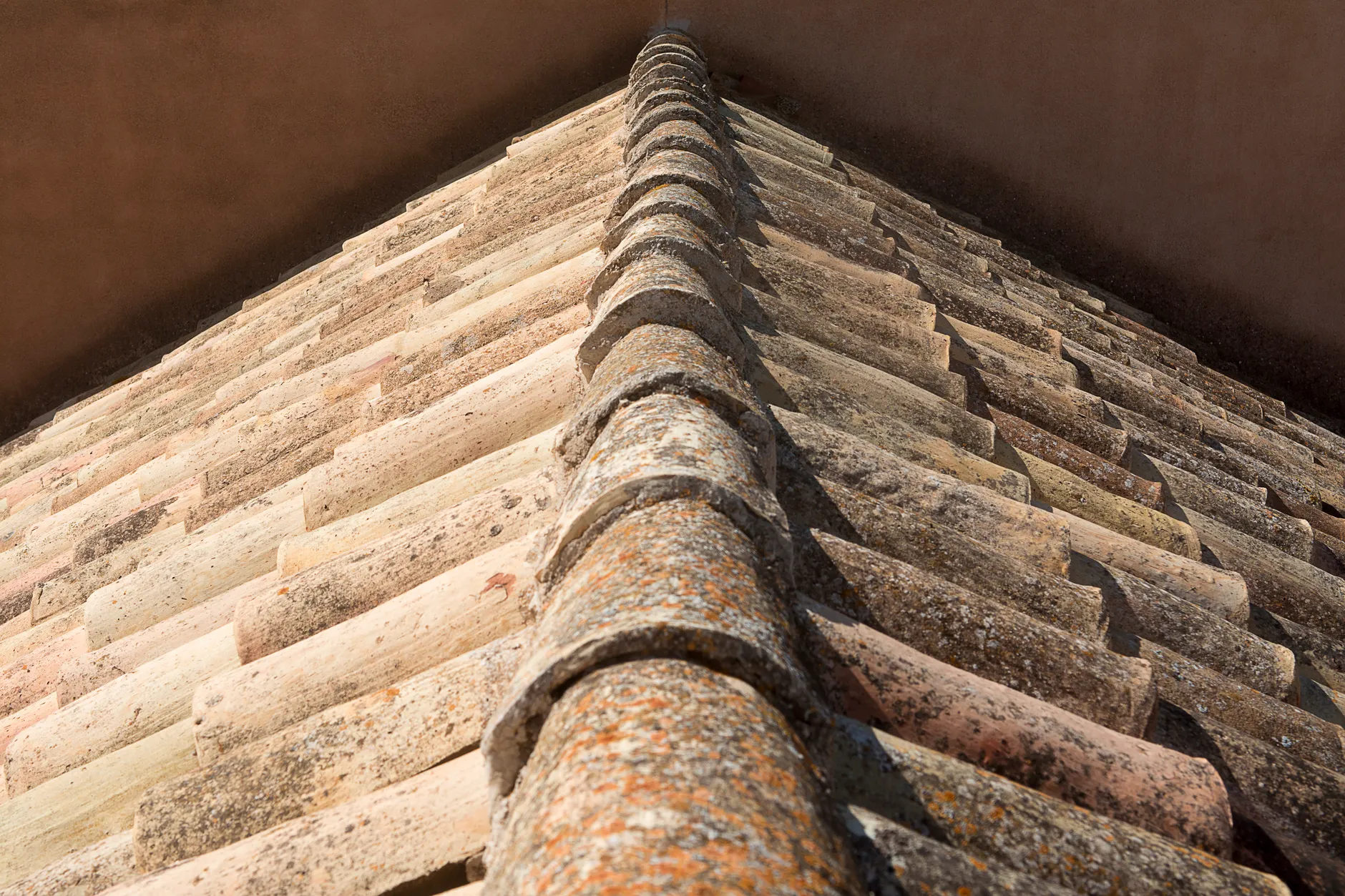
- Slate & Tile Roofing — the pitched slate & tile covering craft: new slate, clay/concrete tile, slipped-tile replacement, dry ridge & verge, mechanically fixed to BS 5534.
- Roof Cleaning & Moss Removal — manual scraping and soft-wash biocide treatment plus gutter clearing on Derby's wet, moss-prone pitches, no high-pressure jetting.
- Emergency & Storm Damage Roofing — 24/7 make-safe, storm and wind damage repair, temporary weatherproofing and insurance-claim support.
- Velux & Roof Window Installation — roof windows, replacement and re-glazing, flat-roof lanterns and sun tunnels, flashed weathertight.
- Roof Coating & Restoration — cleaning, re-pointing and protecting a sound roof with a survey-first, breathable system, never a re-roof substitute.
Where Each of the Ten Fits Derby's Housing
None of these came off a shelf — each answers a fault that recurs on Derby's own roofs.
Repairs, Leadwork & the Slate Craft Beneath Them
Roof repairs and chimney and leadwork both lead back to the inner-city slate terraces off Normanton Road, where the slate slides and the lead around the stacks, valleys and box gutters gives out. Slate and tile roofing sits underneath most of that pitched work as the craft itself — new coverings, dry ridge and verge, done to BS 5534.
Flat Roofs, Re-Roofing & the Roofline's Edge
Flat roofing takes the extensions, garages, dormers and bay tops the pitched services never touch, where felt perishes under the same rain and frost. Re-roofing waits for the moment patching turns dishonest and a full strip is the straight answer. Guttering, fascias and soffits guards the roofline itself, so a choked gutter cannot quietly rot the timber the rest of the roof leans on.
Cleaning, Storm Cover, Roof Windows & Restoration
Roof cleaning and moss removal keeps the covering clear of the moss Derby's damp, tree-lined streets breed before it holds water against the slate or tile. Emergency and storm damage roofing catches whatever the weather does out of hours, when a make-safe cannot wait for a scheduled visit. Velux and roof window installation answers the steady run of loft conversions and extensions across Littleover, Mickleover and Allestree, and roof coating and restoration gives a sound roof more years of life without pretending to be a re-roof it does not need.
Slate at the Centre, Tile Around the Edges
The single biggest driver of any Derby quote is which half of the city the roof sits in, because the stock divides hard. The inner Normanton terraces and the heritage core wear pitched natural slate, tall chimney stacks and lead-lined valleys and box gutters — an aged-slate profile whose real work is re-slating, re-bedding ridges and renewing chimney lead. Littleover, Mickleover and Allestree are almost all interwar and postwar tile — clay plain and concrete interlocking tiles now at the age of slipping, perished underlay and failing ridge lines, with Allestree's bigger, steeper detached roofs bringing trickier hip and valley geometry.
Matching Materials on Older and Protected Roofs
When an older or protected roof has to be matched, the regional coverings are Staffordshire blue and Rosemary-type red clay tiles from Staffordshire and Derbyshire, with natural stone slate the vernacular toward the Peak — so the material is chosen to suit the roof, never a stock modern tile dropped on regardless.
The Two Facts Sitting Under Every Quote
Beyond the roofing itself, two local facts steer how a job is planned.
The Climate: Rain, Freeze-Thaw & BS 5534
Derby is inland, catching around 779 mm of rain a year evenly through the seasons and cycling through winter freeze-thaw rather than coastal wind, which flakes weak slate, springs bedded ridges and rots lead valleys — so fixing is specified to BS 5534.
The Rulebook: Derby City Council & the Derwent
The whole area is the City of Derby unitary authority, so building control runs through Derby City Council, sixteen conservation areas guard coverings on street-facing elevations, and the low ground by the River Derwent sits inside a flood-risk zone now shored up by the Our City Our River defences.
Unsure which of the ten your roof needs? Ring 07700 149979 and talk it through — the category usually becomes clear in the first minute or two. From here you can dig into the local detail for Littleover, Mickleover or Allestree, read what customers have said, or return to the home page to see how the whole service area joins up.
Frequently Asked Questions
What are the ten services, and how were they chosen?
The list runs roof repairs, flat roof repair and replacement, roof replacement and re-roofing, chimney and leadwork, guttering, fascias and soffits, slate and tile roofing, roof cleaning and moss removal, emergency and storm damage roofing, Velux and roof window installation, and roof coating and restoration. Those ten are the highest-demand jobs on Derby roofs, drawn from what actually breaks and what actually gets searched for rather than copied off some national franchise sheet, and each has its own page laying out the full detail. Where a job does not slot obviously into one of them, describe it on 07700 149979 and it usually finds its category within a minute; either way, a free survey opens every one.
Since the whole area is one council, is quoting simpler?
Partly. Because the entire patch falls inside the City of Derby unitary authority, building control and any re-roofing or structural notification pass through Derby City Council, with none of the cross-boundary juggling a service area straddling two authorities has to do. The simplicity ends there, though. Sixteen conservation areas — Friar Gate, Strutt's Park, the Railway district and the former village centres of Mickleover and Allestree included — protect coverings on street-facing pitches, and low ground by the River Derwent lies in a mapped flood-risk zone, so a quote is written to whichever of those touches the address.
Is the price genuinely locked, or does it creep once work begins?
Locked, on paper, once the free survey is done and before a single slate is lifted — and that holds on a small repair as firmly as on a re-roof. The place it matters most is a full strip, where pulling the old covering can expose nail-sick battens or soft timber, so the up-front figure is written to allow for that instead of dangling a low number that later balloons. No covering is disturbed, no chimney opened, until you have accepted the written figure, and a verbal-only estimate is never good enough — always get it on paper.
Which standards does the work meet?
Slating and tiling is done to BS 5534, whose 2014 revision made mechanical fixing against wind uplift the rule rather than the exception. Flat roofs follow BS 6229, with reinforced bitumen membranes to BS 8217 and BS 8747 where a felt system is used. Lead to stacks, valleys and abutments is worked to BS EN 12588 for rolled sheet and the recognised lead codes, and a re-roof answers to Building Regulations Part C and Part L. Raise it on the call and we will run through which of these bears on your particular roof.
Why does roof repair stay the busiest category?
Two forces keep it full. The stock is one: a deep inner-city seam of ageing natural slate off Normanton Road that slips and turns nail-sick, plus suburban clay and concrete tiles now old enough for fixings to fail and underlay to perish. The weather is the other: an inland climate of steady rain and winter freeze-thaw, not coastal gales, that flakes weak slate, springs bedded ridges and eats through lead valleys. Put ageing coverings under that rain-and-frost load and single repairs, storm call-outs and re-fixing runs never stop coming, which is why the service runs around the clock.
How do you separate an emergency from a job that can wait?
An emergency is damage getting worse as you watch — slates or ridge down after a frost or a blow, a roof lying open to the rain, a stain widening across a ceiling — and that skips the diary and goes to dispatch, often with a make-safe first. A lone slipped slate in dry weather, a gutter that only spills in a downpour, or a re-slate you have been meaning to book can sit safely until a scheduled visit. The phone call usually draws the line between the two inside a minute or so, so when in doubt, describe it and let us judge rather than sitting on it.
How does a flat roof differ from a pitched one?
A flat roof keeps water out with a slight fall and one unbroken waterproof skin instead of overlapping slates or tiles, so it goes wrong in its own way — the skin splits, blisters, holds standing water or lifts at the upstands and around the outlets. Across Derby's extensions, garages, dormers and bay tops, older mineral felt eventually cracks under the same rain and frost the pitched roofs take. We re-cover to BS 6229 in reinforced bitumen membrane, EPDM rubber laid cold or GRP fibreglass to suit the deck, and the survey reads the falls and outlets first, because a roof that ponds will keep leaking under any covering.
How is the repair-or-replace call made?
Scale of the problem decides it. A contained fault — a patch of slipped or cracked slates, one failed flashing, a small storm scar — is a repair. A roof losing slates in several places at once, riddled with nail sickness where the fixing nails have rusted through and let slates run off wholesale, sagging on tired timbers, or simply worn out, is pointing at a full re-roof. The roofer reads which it is during the free survey before pricing either road, and on a conservation pitch the re-slate is costed in matching natural slate or clay tile. Patching a roof that is finished is a false economy, and we will say so.
Why is chimney and leadwork a service in its own right?
Because the tall party-wall stacks and lead-lined valleys and box gutters on Derby's older terraces are the leak point that recurs most, and dressing lead is a trade apart from laying slate. The flashings and soakers around a stack, and the lead running a valley between two pitches or terrace rows, fatigue and split over decades of heat movement and freeze-thaw, while the mortar fillets and the stack brickwork craze and let water creep down the chimney breast inside. Re-leading, re-pointing and re-bedding to BS EN 12588 and the lead codes is nothing like re-fixing a field of slate, so it stands on its own.
Do gutters, fascias and soffits really affect the roof?
Far more than their modest look suggests. They are the roofline's edge and its drainage, and once a gutter spills or a fascia softens, water tracks down the wall and back into the rafter feet and wall plate instead of running clear of the building — leave that through a wet Derby winter and it rots the timber the roof rests on. On the leafy suburban streets and beside Allestree Park, heavy leaf fall chokes gutters and valleys and speeds the whole thing up. Renewing worn timber or uPVC boards and re-hanging the guttering to a true fall guards the structure everything else depends on.